Master’s Program in Environmental Engineering
Build the engineering knowledge and practical skills to address environmental challenges.
Program Overview
The Master’s Program in Environmental Engineering at ITB is closely connected to global environmental priorities that will remain relevant for decades: climate change, the UN Sustainable Development Goals, industrial HSE and ESG standards, low-carbon development, and environmental degradation associated with urbanisation and industrialisation.
43 SKS
Total study load under the updated curriculum.
3 Semesters
Designed for 1.5 years of regular study.
The program is designed as a transformative phase in which students develop analytical capacity, critical thinking, systems understanding, and environmental engineering capabilities.
A rigorous and supportive academic environment is sustained by teaching staff with an established culture of excellence.
The program supports both professional and academic careers. For students entering industry, government, consulting, and environmental policy, it builds technical and analytical competence. For those pursuing academic and research careers, it provides an opportunity to establish a substantive research record. Some student theses are directly connected to faculty research agendas and international collaborations.
The Master’s Program in Environmental Engineering is based at ITB Ganesa Campus in Bandung.
Vision & Mission
Vision
To become an excellent, internationally recognised master’s program in the development of science, technology, and professional practice in Environmental Engineering to support sustainable development.
Mission
Provide research-based education, develop environmentally friendly technological innovation, and make tangible contributions to society through collaboration and knowledge transfer.
Educational Objectives
Professional Competence
Prepare competent environmental engineering professionals for government and non-government organisations, industry, consulting and contracting, research, and education. Graduates address complex problems across TML, PPP, KKL, and KTL through technical, managerial, and policy capabilities.
Lifelong Learning
Develop graduates who continue learning through formal and nonformal education, adapting to advances in science and technology and changing global environmental challenges.
Ethics & Leadership
Develop ethical professionals with creativity, critical thinking, integrity, leadership, and interdisciplinary collaboration skills who contribute to complex environmental problem solving nationally and internationally.
Specialisations
Environmental Technology & Management (TML)
Integrates environmental management technologies and managerial strategies for controlling environmental impacts.
- Analyse complex environmental management problems and system requirements for water, air, and solid waste.
- Evaluate the effectiveness of environmental management technologies and policies across industry and government.
- Develop efficient, adaptive environmental technology and management systems that support the Sustainable Development Goals.
Graduates are prepared to become planners, policy analysts, and environmental system managers in government, industry, environmental consulting, and national or international research institutions.
Pollution Prevention & Control (PPP)
Develops expertise in designing and applying effective technologies to prevent and control environmental pollution.
- Analyse pollution sources, characteristics, and impacts across water, air, and soil.
- Evaluate pollution control technologies and select appropriate alternatives based on technical, economic, and social considerations.
- Develop innovative technologies for pollution prevention and environmental quality improvement.
Graduates are prepared for roles as researchers, process engineers, and technical consultants in pollution control and cleaner technology.
Environmental Health & Safety (KKL)
Integrates public health, occupational safety, and environmental protection within an environmental engineering framework.
- Identify and analyse health and safety risk factors in workplaces and residential environments.
- Evaluate and manage environmental health and safety programs using scientific principles and national regulations.
- Design preventive, promotive, and corrective strategies to improve environmental quality and public health.
Graduates can contribute as environmental occupational health and safety specialists, environmental auditors, and environmental health consultants in the public and private sectors.
Sustainability in Environmental Engineering (KTL)
Applies sustainability principles to the planning and management of environmental, economic, and social systems.
- Analyse relationships between economic activity, natural resource use, and environmental sustainability.
- Evaluate sustainable development policies and instruments in the context of climate change mitigation and resource efficiency.
- Manage and develop science-based adaptive strategies that balance economic development with environmental conservation.
Graduates are prepared to become environmental policy analysts, sustainability program designers, and researchers in the green economy and environmental governance.
Study Pathways
Coursework with Research Thesis
Combine structured coursework with supervised thesis research.
Coursework with Case Study
Apply environmental engineering knowledge through a case-study capstone and dissemination.
Research-Based Master’s (MBR)
Focus on independent supervised research, scientific writing, dissemination, and preparation for research or doctoral careers.
Curriculum Structure
The updated curriculum comprises 43 SKS (Indonesian credits), with a planned duration of 3 semesters (1.5 years). Students select a study pathway alongside their academic specialisation.
| Credit Component | Research Thesis | Case Study | Research-Based |
|---|---|---|---|
| Institute Requirements | 3 | 3 | 3 |
| Program Requirements | 9 | 9 | 9 |
| Specialisation Courses | 12 | 12 | — |
| Free Electives | 6 | 9 | — |
| Capstone | 13 | 10 | 31 |
| Total SKS | 43 | 43 | 43 |
Core study includes Research Methods and Digital Literacy, Environmental Science and Engineering, Data Analysis Methods, and Pollutant Transport and Transformation. Capstone activities follow the selected thesis, case-study, or research-based pathway.
Explore the Official Course Catalogue →Graduate Outcomes
The program’s learning outcomes align with Level 8 of the Indonesian National Qualifications Framework (KKNI).
Analytical Capability
Identify and formulate complex environmental engineering problems by selecting and applying appropriate methods and techniques.
Synthesis & Research
Design and conduct experiments, analyse and interpret experimental data to solve environmental engineering problems, and produce work recognised nationally or internationally.
Problem Solving
Combine knowledge and apply current environmental engineering technologies to solve problems.
Professional Expertise
Demonstrate specific expertise in Environmental Technology and Management, Pollution Prevention and Control, Environmental Health and Safety, or Sustainability in Environmental Engineering to address advanced environmental issues.
Personal Development & Leadership
Master scientific communication, interdisciplinary collaboration, and lifelong learning to support professional and academic career development.
International Opportunities
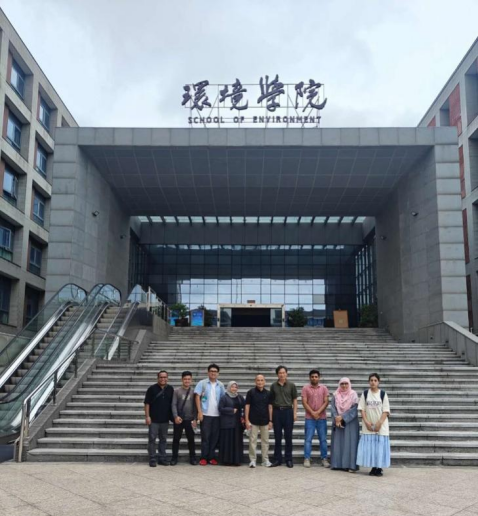
Students have opportunities to join a double-degree program with Chuo University, Japan, and student exchange activities with Nanjing University, China.
The program also welcomes international recipients of the Kemitraan Negara Berkembang scholarship and The Indonesian AID Scholarship, and connects students with international guest lecturers through teaching and research activities.
While offering strong international exposure, the program remains firmly grounded in the environmental challenges of Indonesia and Southeast Asia, providing a distinctive regional learning context.
Accreditation
Bridging Program
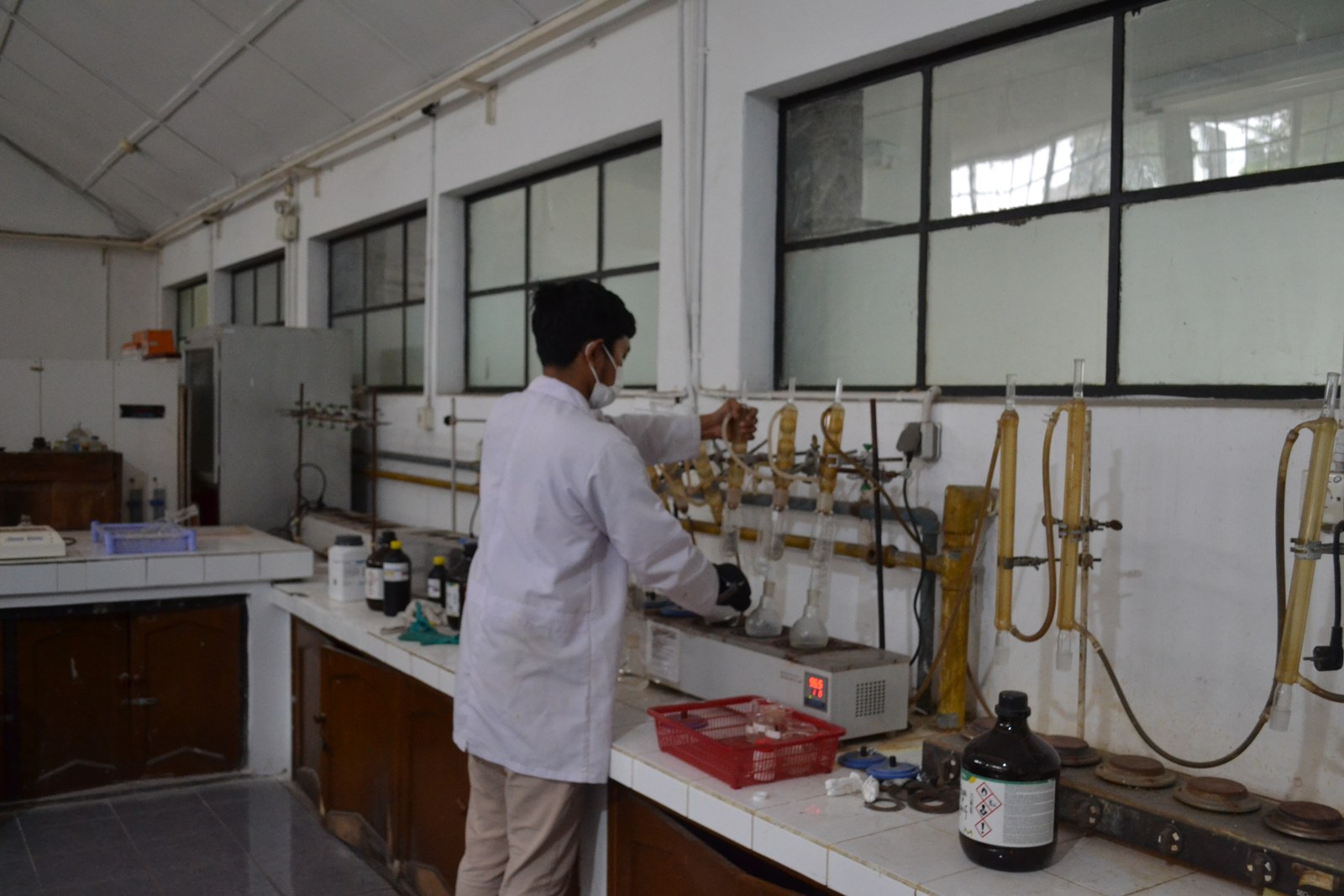
Students admitted from backgrounds other than Environmental Engineering are required to complete a bridging program in Environmental Engineering and Environmental Laboratory before beginning regular coursework. Details are communicated to prospective students during selection and admission.
Scholarships
LPDP Scholarships
LPDP provides domestic scholarship opportunities for master’s and doctoral study in Environmental Engineering at ITB.
Explore Scholarship Information →Ganesha Talent Assistantship (GTA)
ITB provides GTA scholarship opportunities for Indonesian and international students.
Explore Scholarship Information →Other Government Scholarships
Beasiswa Unggulan supports eligible Indonesian students at undergraduate, master’s, and doctoral levels. The Ministry of Higher Education, Science and Technology also offers Beasiswa Pendidikan Indonesia.
Explore Scholarship Information →Beasiswa Pendidikan Indonesia →External Scholarships & Internships
Further scholarships, partnerships, and internship opportunities can be explored through ITB’s financial aid information.
Explore Scholarship Information →Admissions & Enquiries
Apply to ITB
Visit ITB Admission for current postgraduate entry requirements, application procedures, schedules, and fees.
Explore ITB Admissions →Talk to the Program Team
Contact the postgraduate Environmental Engineering team for program-specific enquiries.
Email the Program Team →