Master’s Program in Water Supply and Sanitation Infrastructure Management
Build the engineering knowledge and practical skills to address environmental challenges.
Program Overview
The Master’s Program in Water Supply and Sanitation Infrastructure Management (PIAS) at ITB is a multidisciplinary program focused on developing professional capacity to design, manage, and evaluate water supply and sanitation infrastructure.
The program responds to the challenges of providing safe, sustainable drinking water and sanitation services, in line with the Sustainable Development Goals, particularly SDG 6: Clean Water and Sanitation.
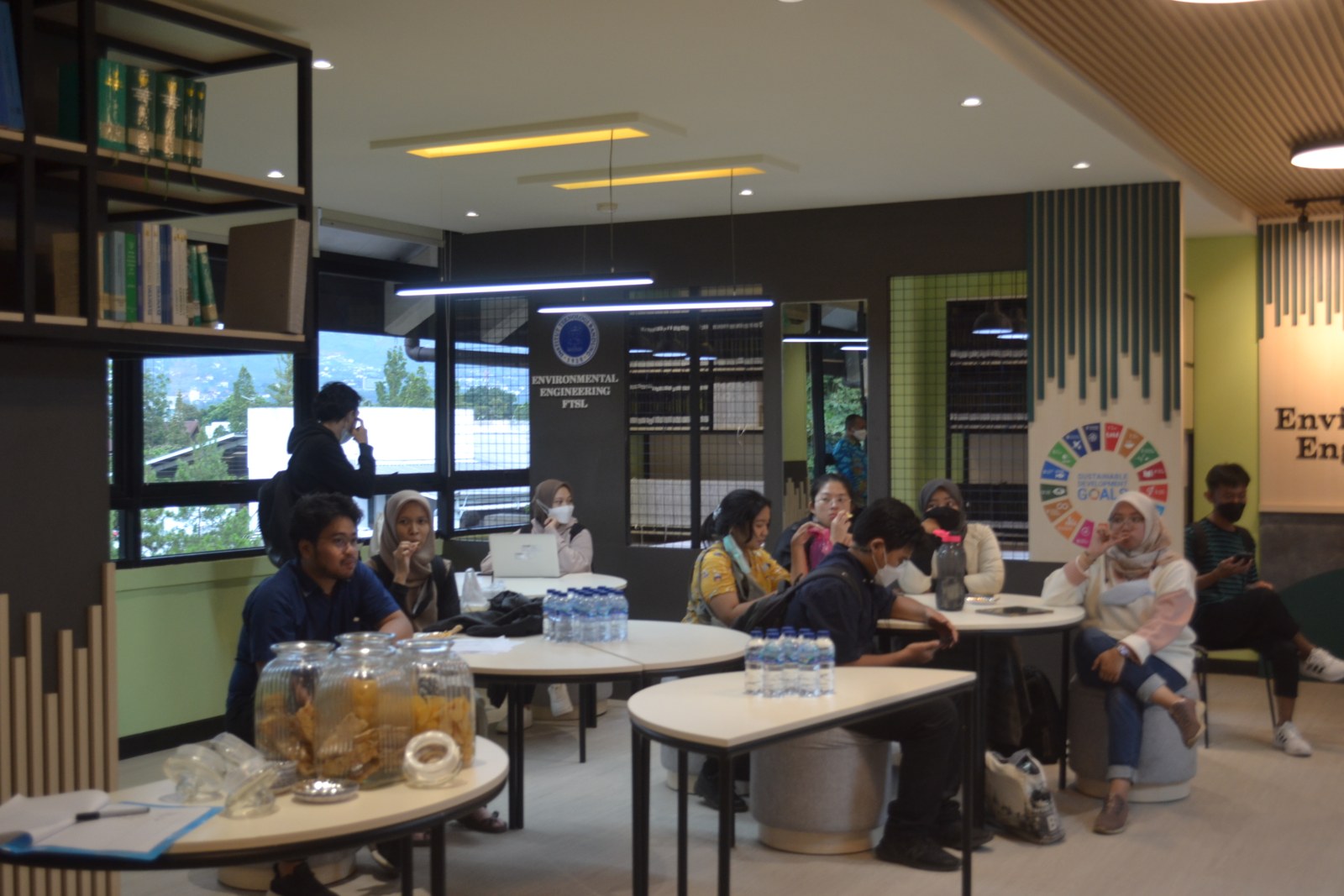
Students come from backgrounds including environmental engineering, civil engineering, regional planning, environmental health, and project management, creating a collaborative learning environment with diverse perspectives.
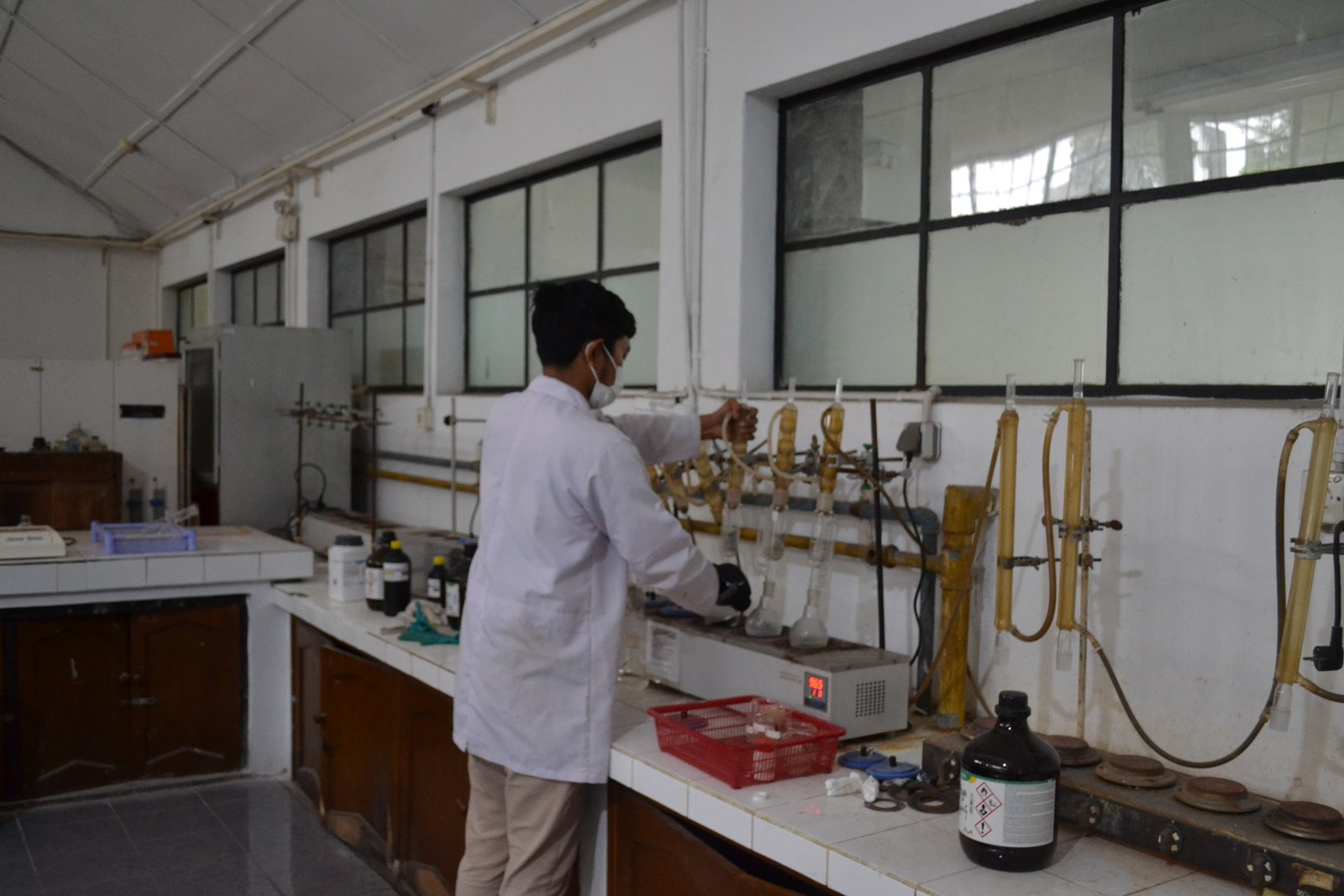
PIAS teaching and learning facilities are located at ITB Jatinangor Campus.
Vision & Mission
Vision
To establish PIAS as a higher education institution and centre for science and technology development with competitive excellence, reliability, and integrity in water supply and sanitation infrastructure; and, together with other ITB units and leading national institutions, help Indonesian society become a united, sovereign, and prosperous nation.
Mission
Provide postgraduate education to improve human resource quality through the development of science and technology for national well-being, particularly in water supply and sanitation infrastructure.
Educational Objectives
Academic & Professional Capability
Prepare master’s graduates to meet academic and professional needs in solving complex water supply and sanitation infrastructure management problems nationally and internationally.
Lifelong Learning
Develop graduates who continue to grow and learn through formal and nonformal education.
Ethics, Critical Thinking & Leadership
Prepare graduates who uphold professional ethics, think creatively and critically, and contribute to water and sanitation infrastructure management nationally and internationally with integrity and leadership.
Learning & Final Assignments
Project-Based Studio
Work collaboratively on water and sanitation infrastructure projects through a studio course supported by intensive field investigation.
Data & Spatial Planning
Develop capabilities in data analysis and computation, digital research literacy, and spatial-data-based environmental and settlement infrastructure planning.
Research Thesis
Complete a research-focused final assignment within the program’s capstone framework.
Project Thesis
Complete a project-focused final assignment. Research and project routes carry the same credit load, with different scopes of final work.
Curriculum Structure
The revised curriculum comprises 46 SKS (Indonesian credits). The regular study plan is organised as follows:
Semester 1 · 12 SKS
| Code | Course | SKS |
|---|---|---|
| IS5001 | Research Methodology and Digital Literacy | 3 |
| IS5002 | Spatial-Data-Based Environmental and Settlement Infrastructure Planning | 3 |
| IS5003 | Data Analysis and Computation in Water and Sanitation | 3 |
| IS5004 | Solid Waste Management Systems | 3 |
Semester 2 · 12 SKS
| Code | Course | SKS |
|---|---|---|
| IS5005 | Drinking Water Management Systems | 3 |
| IS5006 | Wastewater Management and Treatment Systems | 3 |
| — | Elective 1 | 3 |
| — | Elective 2 | 3 |
Semester 3 · 13 SKS
| Code | Course | SKS |
|---|---|---|
| IS6001 | Water and Sanitation Infrastructure Project Management (Studio) | 4 |
| IS6090 | Proposal and Research / Final Project Instrument Development | 3 |
| — | Elective 3 | 3 |
| — | Elective 4 | 3 |
Semester 4 · 9 SKS
| Code | Course | SKS |
|---|---|---|
| IS6091 | Research / Final Project Implementation | 6 |
| IS6092 | Results Seminar and Master’s Examination | 3 |
The regular curriculum is organised over 4 semesters. The document also provides an option for students capable of meeting the academic workload to complete their studies in 3 semesters; this is an alternative route rather than the standard schedule.
Explore the Official Course Catalogue →Elective Courses
The revised curriculum offers the following PIAS elective courses, each carrying 3 SKS:
- Sustainable Solid Waste Infrastructure Management
- Faecal Sludge Management and Treatment
- Nonconventional Drinking Water Management Systems
- Sustainable Settlement Drainage Systems
- Water and Sanitation Laboratory
- Institutional and Financial Aspects of Water and Wastewater
- Sustainable Landfill Planning
- Climate-Resilient Water and Sanitation Infrastructure
- Institutional and Financial Aspects of Solid Waste Management
- Community-Based Development
- Sanitation Interventions and Public Health Risk
- Sanitation Management in Disaster-Affected Areas
The document also recommends cross-program electives in Sustainable Water Management Systems, Advanced Water Treatment, and Environmental Economics and Valuation.
Graduate Outcomes
Evaluate Complex Problems
Evaluate water supply and sanitation infrastructure management problems using engineering, science, and mathematics through interdisciplinary or multidisciplinary approaches.
Plan Infrastructure Management
Plan water supply and sanitation infrastructure management based on field investigations to address specific public health, safety, and well-being needs, while considering global, cultural, social, environmental, and economic factors.
Develop Tested Innovations
Apply knowledge, technology, and engineering to produce innovative, tested work in water supply and sanitation infrastructure management.
Collaborate & Lead Responsibly
Build teamwork through leadership, emotional maturity, independence, and effective communication with diverse audiences, while understanding professional ethics and responsibilities in making judgements.
Achievements & Recognition
- Collaboration with international universities and research institutions.
- Achievements in national and international environmental technology innovation competitions.
- Active contributions to the formulation of national environmental policy.
Admissions & Preparation
Applicants should hold a bachelor’s-equivalent qualification in Environmental Engineering, including Environmental Infrastructure Engineering. Strong applicants from other disciplines may also be considered.
For applicants from other disciplines with at least two years of work experience in water and sanitation, bridging requirements are determined through the program’s selection process. Applicants without that minimum experience are required to complete 6 SKS of preparatory adjustment before enrolment in PIAS.
Selection includes review of application documents, academic aptitude and English proficiency evidence, and a program-level academic assessment. Documents specified in the curriculum include the previous degree and transcript, insurance evidence, photograph, statement of purpose, applicant portfolio and research plan, prospective supervisor willingness, and two recommendations from lecturers or supervisors. Current procedures and test requirements should be checked on ITB Admission.
Explore ITB Admissions →