Undergraduate Program in Environmental Infrastructure Engineering
Faculty of Civil and Environmental Engineering · Institut Teknologi Bandung
Program Overview
The Undergraduate Program in Environmental Infrastructure Engineering (RIL) at ITB prepares graduates to design, build, and manage infrastructure that supports environmental sustainability. Its fields of study include clean water systems, wastewater management, drainage, flood control, solid waste management, and infrastructure for climate change mitigation.
RIL combines civil engineering, environmental engineering, and regional planning principles to develop resilient, environmentally sound, and sustainable infrastructure solutions. Graduates gain technical and managerial capabilities, together with an understanding of relevant regulations and policies.
The Environmental Infrastructure Engineering program is based at ITB Jatinangor Campus, Labtek 1B, 3rd floor, Jl. Let. Jen. Purn. Dr. (HC) Mashudi No. 1, Sumedang.
Vision
To become an undergraduate program with competitive excellence, reliability, and global standing in built-environment engineering, particularly water supply and sanitation in residential, urban, and rural settings; and, together with other ITB units and leading national institutions, help Indonesian society become a united, sovereign, and prosperous nation.
Mission
Engineering & Environmental Management
Prepare reliable engineering graduates to address environmental engineering problems, particularly in human-built environments in urban and rural areas, integrating their work with an understanding of environmental management.
Water Supply & Sanitation
Prepare engineering graduates capable of professionally solving engineering problems related to water supply and sanitation, both in Indonesia and internationally.
Relevant Science & Technology
Prepare experts and professionals who focus on developing science and technology relevant to environmental problems, particularly those affecting Indonesia.
Infrastructure Performance
Prepare water supply and sanitation professionals to meet basic human needs and improve the performance of facilities and infrastructure in accordance with applicable standards.
Achievements & Recognition

- Collaboration with international universities and research institutions.
- Winners of national and international environmental technology innovation competitions.
- Active contributions to the formulation of national environmental policy.
Educational Objectives
Professional Commitment
Produce graduates strongly committed to professional development in drinking water and sanitation and their principal components within human habitats, applying fundamental sciences to design and develop operational engineering approaches for environmental infrastructure.
Adaptability & Lifelong Learning
Produce graduates able to adapt to local and global change and keep pace with current developments through lifelong learning and/or further education.
Ethics & Social Contribution
Produce ethical, socially aware graduates with a sense of national responsibility who contribute significantly to improving public health and well-being.
Graduate Outcomes
Graduates of the Undergraduate Program in Environmental Infrastructure Engineering at ITB are able to:
Apply Engineering Knowledge
Apply mathematics, basic sciences, and engineering knowledge to solve water supply and sanitation infrastructure engineering problems using appropriate techniques and principles.
Design Infrastructure Systems
Design water supply and sanitation infrastructure systems while considering economic, social, safety and health constraints, natural resources, and the capabilities of local communities.
Communicate Effectively
Communicate effectively with relevant stakeholders throughout the water and sanitation infrastructure planning process.
Professional & Ethical Responsibility
Exercise professional and ethical judgement in understanding present and future impacts of water supply and sanitation infrastructure engineering solutions, responding to evolving environmental issues in infrastructure planning, design, and operation.
Collaborative Leadership
Work in teams to solve water and sanitation infrastructure problems, demonstrating leadership that creates a collaborative and inclusive environment for establishing goals, objectives, and plans.
Experiment & Analyse
Develop and conduct experiments and analyse and interpret data related to the planning and operation of water and sanitation infrastructure.
Continue Learning
Explore and apply current science and technology through appropriate learning strategies.
Curriculum Structure
Total study load: 144 SKS (Indonesian credits) over 8 semesters, comprising:
General Courses
Mathematics, Physics, Chemistry, Indonesian Language, Pancasila, and Religious Education.
Engineering Fundamentals
Mechanics, Fluid Mechanics, Statics, Hydrology, and Basic Geotechnics.
RIL Specialist Courses
Water Supply Systems, Wastewater Management Systems, Drainage Planning, Solid Waste Management Engineering, Green Infrastructure, and Infrastructure Management.
Elective Courses
Climate Change Adaptation Infrastructure, Hydraulic Structure Design, Desalination Technology, and Infrastructure Project Management.
Laboratory & Fieldwork
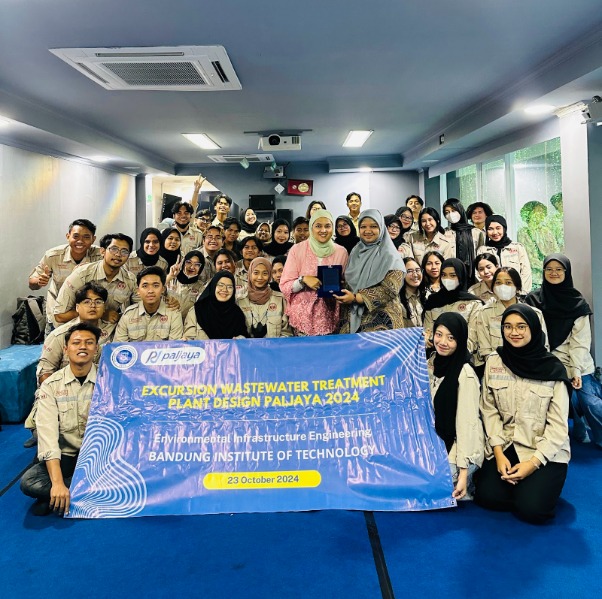
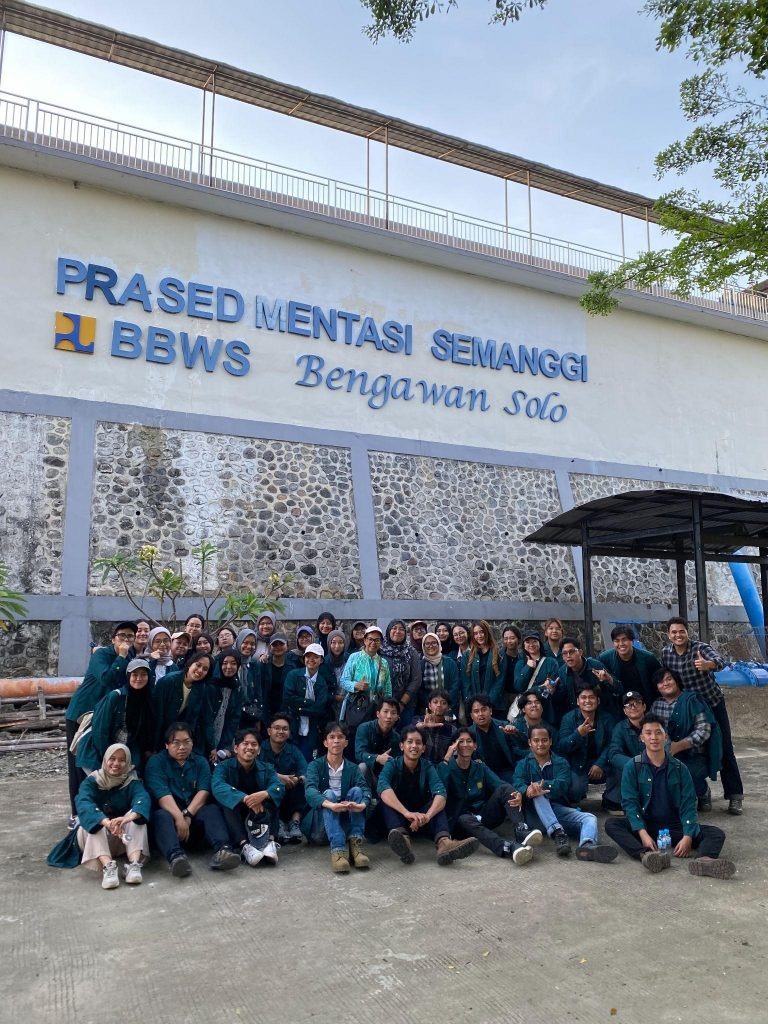
Direct experience on environmental infrastructure projects.
Final Project
A design project or research related to environmental infrastructure.