Published 2026-04-23
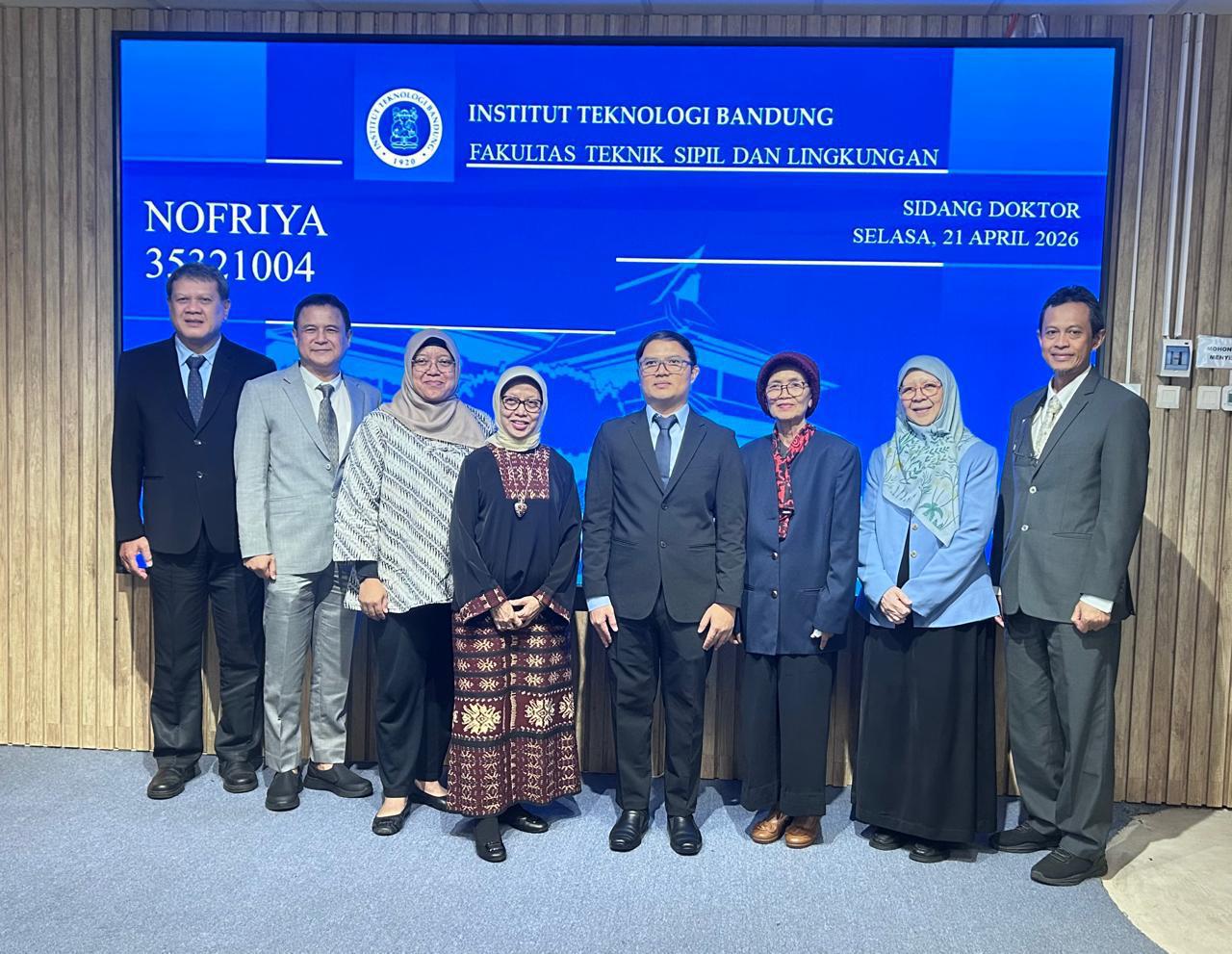
Tourism is an important economic sector in Indonesia, but its growth also places pressure on environmental carrying capacity. Dr. Nofriya defended a dissertation examining tourism’s environmental impacts in ITB’s Doctoral Program in Environmental Engineering on 21 April 2026.
The study, titled “Model Penilaian Pariwisata Berwawasan Lingkungan Melalui Life Cycle Assessment di Kota Bukittinggi” (an environmentally informed tourism assessment model using life cycle assessment in Bukittinggi), addresses the constraints of a densely populated destination with limited land and natural resources.
Assessing a Tourist’s Daily Footprint
The functional unit was one tourist’s activities during one day in Bukittinggi. The assessment covered accommodation, transport, recreation, culinary tourism, and shopping. It examined global warming potential and endpoint impacts on human health and the environment. Without serious policy intervention, the study projected increasing environmental burdens through 2040.
Unplanned tourism activity was associated with human health burdens expressed in disability-adjusted life years (DALYs), and degradation of freshwater, terrestrial, and marine ecosystems. The study also reported an increase in future natural resource restoration costs of USD 0.36 per tourist per day.
A Sustainable Tourism Roadmap
An optimistic intervention scenario combined solar panels, rainwater harvesting, electric transport services, and the replacement of firewood with cleaner energy sources to reduce environmental burdens.
The research produced a Sustainable Tourism Roadmap for Bukittinggi for 2026–2035. Using a Three Horizons approach, it sets out three stages: Stabilisation, Transformation, and Integration.
The roadmap offers an academic basis for greener and lower-carbon tourism policy in Bukittinggi, and a reference for similar research in other Indonesian destinations.